Ready to Work With Us?
Let us know how we can support your organization. Get in touch with our team to discuss which services best fit your needs.
Start a Conversation+265 (0) 984 195 164 / 899 686 629

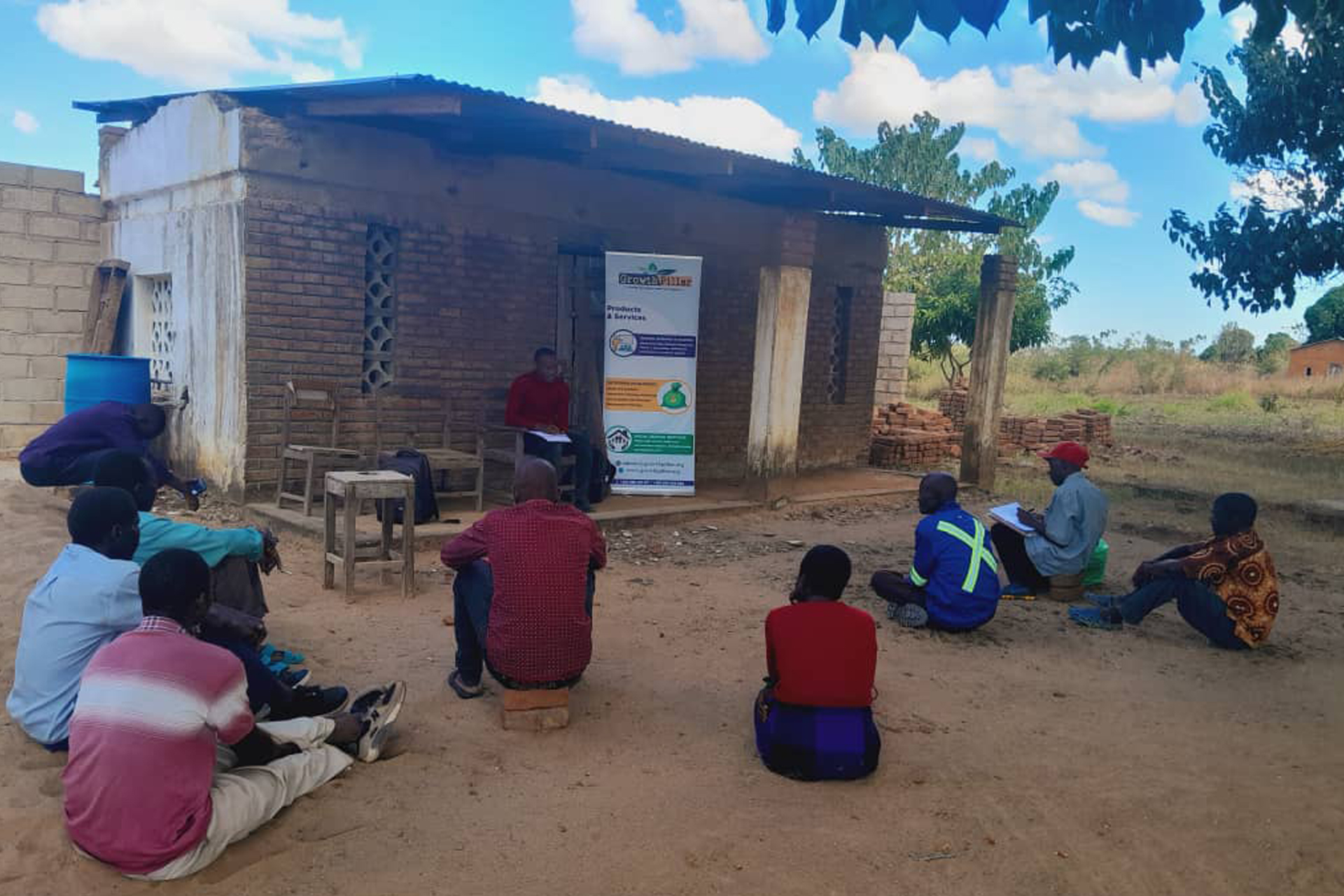
At Growth Pillar, we believe that good decisions start with good evidence. Our Research, Policy and Innovation Unit supports organisations to understand complex problems, test ideas, learn from implementation, and design strategies that actually work in real-world contexts.
We specialise in applied, decision-focused research, that does not sit on shelves, but directly informs policy, programming, investment, and organisational strategy. Our work bridges the gap between theory and practice by building evidence in lived experience, markets, and community contexts.
Many organisations struggle with:
As a result, resources are wasted, programs underperform, and decision-makers lack confidence.
We work closely with clients to provide them with practical, credible, and usable research and policy support that ensures that research questions, methods, and outputs are aligned to real decision-making needs in order to help organisations:
We design and conduct qualitative, quantitative, and mixed-methods research to explore social, economic, agricultural, health, and institutional issues. Our research is participatory, ethical, and tailored to the context.
We assess whether ideas, projects, or investments are viable by analysing demand, risks, costs, and sustainability considerations.
Based on research findings, we support the design and development of practical solutions, interventions, tools, or products that directly respond to identified gaps and challenges.
We design and implement baseline, midline, and endline studies to track change over time, measure results, and inform adaptive management throughout project lifecycles. These independent project and programme evaluations assess relevance, effectiveness, efficiency, impact, and sustainability, helping organisations understand what worked, what didn’t, and why.
We support organisations and institutions to analyse and review policies, strategies, and frameworks, to assess relevance, effectiveness, and alignment with local contexts. We also support the development of new, clear, evidence-based policies, strategies, and action plans, aligned with institutional goals and operating contexts.
We support organisations to design and implement MEL systems that go beyond compliance, focusing on learning, adaptation, and improvement. This includes evaluations, learning reviews, and evidence synthesis.
We assess organisational capacity, systems, and performance, and support institutions to plan structured growth and development across governance, operations, human resources, and sustainability.
We support organisations to translate strategies into practical annual programmes and institutional plans that clearly define priorities, activities, responsibilities, and performance targets.
We support organisations to design staff and employee management plans, including role clarity, performance expectations, supervision structures, and capacity development pathways.
We support the integration of cross-cutting issues such as gender equality, inclusion, and diversity into research design, programmes, policies, and evaluations to ensure equitable outcomes.
We design and deliver short courses and professional development programs for practitioners, organisations, and institutions seeking to strengthen skills in research, policy, leadership, MEL, innovation, management systems, decision-making, and team effectiveness. We also provide training and advisory support on resource mobilisation, helping organisations strengthen skills in proposal development, partnership building, and sustainable financing strategies. Additionally, we support organisations and teams to strengthen project management skills, including planning, implementation, risk management, reporting, and adaptive management.
Let us know how we can support your organization. Get in touch with our team to discuss which services best fit your needs.
Start a Conversation
Growth Pillar is a multi-specialty innovative and holistic enterprise dedicated to providing technical assistance that empowers households, small and medium-scale enterprises, and social service institutions.

Growth Pillar - Copyright . All rights reserved.
Growth Pillar is an innovative and holistic entity providing technical assistance to families, businesses, and social service institutions to foster sustainable development and build both individual and community resilience to environmental, systems and technological change.